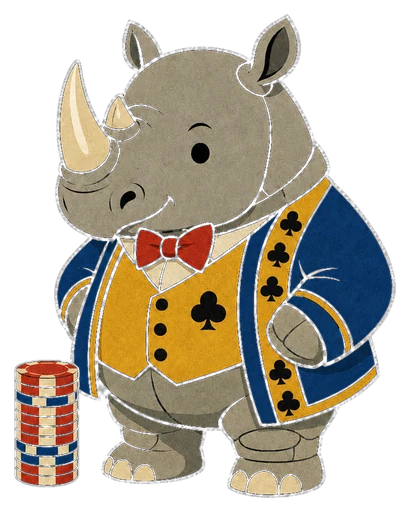
Tellsona No.01
IronhornRhino
The Juggernaut
TASB
Picks strong hands and charges ahead
never backing down once committed
This kind of player
- This player picks starting hands strictly, then takes the lead and bets big.
- Even when re-raised, they think "I've come this far" and rarely back down.
- They are quiet at the table, but when they finally move, it is the heaviest blow anyone throws.
- Plays only a few hands, but in the ones it does play, it takes the lead and bets big on its own.
- Even when an opponent fights back, it rarely folds and tries to push the hand all the way through to the end.
The four axes
- Entry: Tight (plays fewer hands than GTO)
- Initiative: Aggressive (bets and raises a lot)
- Resilience: Sticky (rarely folds under pressure)
- Size: Big (bigger sizes than GTO)
Where it sits among the 16 types
Reading the Ironhorn Rhino
On the four axes
On the four axes: fewer hands, bets more, rarely folds, bigger sizes. This combination is picky about which hands it plays, then puts its full weight behind every hand it does decide to enter. Three of the four axes line up on the "step forward" side, and the only one that holds back is how wide it plays. In other words, the restraint all happens before the hand starts, and very little of it remains once the chips go in.
At the table
At the table, this player hardly moves for long stretches. They open only with strong hands and defend the blinds less often than most. In exchange, in the hands they do play, they bet the flop themselves instead of waiting, then keep firing big on the turn and the river. When someone re-raises them, they usually answer with a call or an all-in as long as they hold top pair or better. Because of this pattern, others at the table tend to read it as "if that player is in the pot, they have something strong."
Common leaks
The leaks tend to show after an opponent has signaled real strength. They pay off all the way with one pair facing a river raise, or with an overpair on a board where the draw has just come in, because folding there feels like giving up. The other issue is being easy to read: since they play a narrow range and bet big, opponents start fighting back only with strong hands and simply get out of the way with the rest. As a result, the amount they can collect with medium-strength hands keeps shrinking.
How it differs from GTO
Compared with GTO, they tend to drift toward fewer hands, more betting, fewer folds when bet into, and bigger sizes. The GTO strategy plays the same spots with more variety: it mixes checks and small bets in alongside the big ones, and when a medium-strength hand faces a raise, it lets go of part of those hands instead of continuing with all of them. The gap shows most often in big pots on the turn and river, where a single decision carries the most chips.
The prescription in a word
In a word: "Before betting big, doubt the opponent's strength just once." Bringing small bets and checks back into the mix creates more spots where the same strength of hand can still collect chips, instead of only getting paid when the opponent is also strong.
Strengths at the table
- Because they filter their hands before entering, their bets usually come with strong hands that justify the big sizes.
- Against a timid opponent, sheer pushing power alone can carry the whole pot away.
- They are used to pressure, so they stay calm and steady when an opponent goes on the attack.
Where it tends to leak
- Even with a hand that is behind, "I don't want to fold" comes first, and big pots are exactly where this costs the most.
- Using only big sizes makes their strength easy for opponents to read and leaves thin value on the table.
Prescription for this type
Start with oneBefore pushing all the way, ask yourself just once how strong the opponent really is.
A typical hand
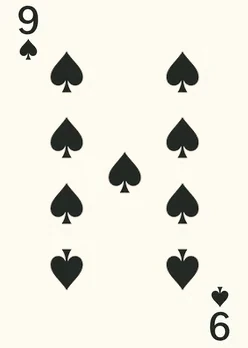
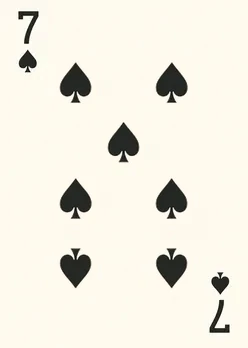
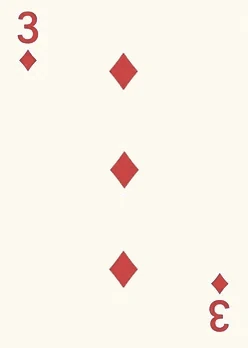
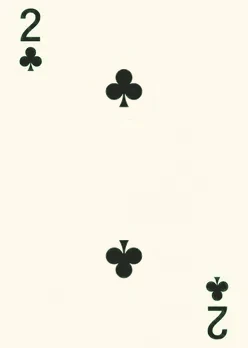
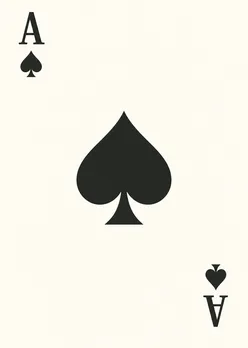
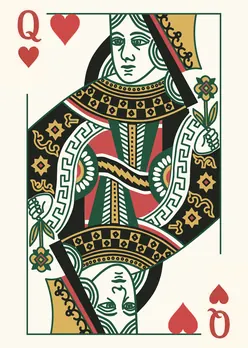
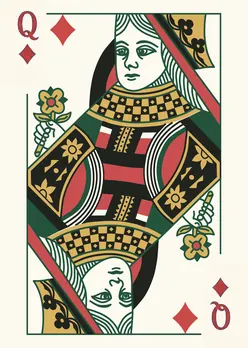
You raise Q♥Q♦ in the CO and the BB calls. You bet the 9♠7♠3♦ flop and the 2♣ turn and get called both times. River A♠. The BB bets the size of the pot.
- Fold
- Call
- Raise
Matchups at the table
Matchups as seen from the Ironhorn Rhino. Tap a type to see the details of how the two match up.
Good matchups
Tough matchups
 Unbothered CapybaraThe FortressTough
 Cautious ElephantThe GuardianTough
 Shell-Keeper SnailThe KeeperTough
Every type
 No.01Ironhorn RhinoSame type
 No.02Constricting SnakeEdge
 No.03Rampaging BearEdge
 No.04Snapping WolfEdge
 No.05One-Kick KangarooEven
 No.06Gap-Striking FoxEdge
 No.07Dashing CheetahEdge
 No.08Mischief CatEdgeNo.09Unbothered CapybaraToughNo.10Shell-Keeper SnailTough
 No.11See-It-Through GiraffeEven
 No.12Hugging KoalaEvenNo.13Cautious ElephantTough
 No.14Lookout RabbitEven
 No.15Whimsical AlpacaEven
 No.16Pecking SparrowEdge
If you face this type
How to adjust your own play when you sit with the Ironhorn Rhino.
- Bet↓LessCheck and let them bet
- Raise↓LessRaise for value only
- Fold↓LessCall down wider
- Size↑BiggerSize up for value; they don't fold
What is your tell? The Tell Test finds out from 32 hand spots (about 4 min, no sign-up).
Take the Tell Test