Tell Test result
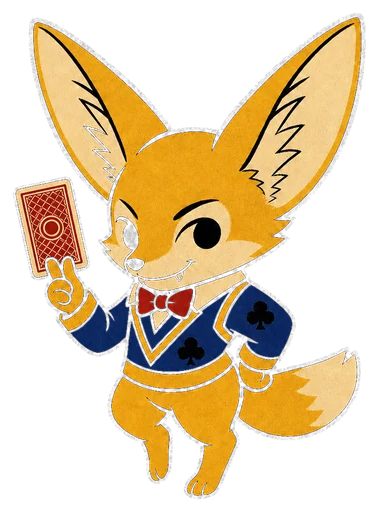
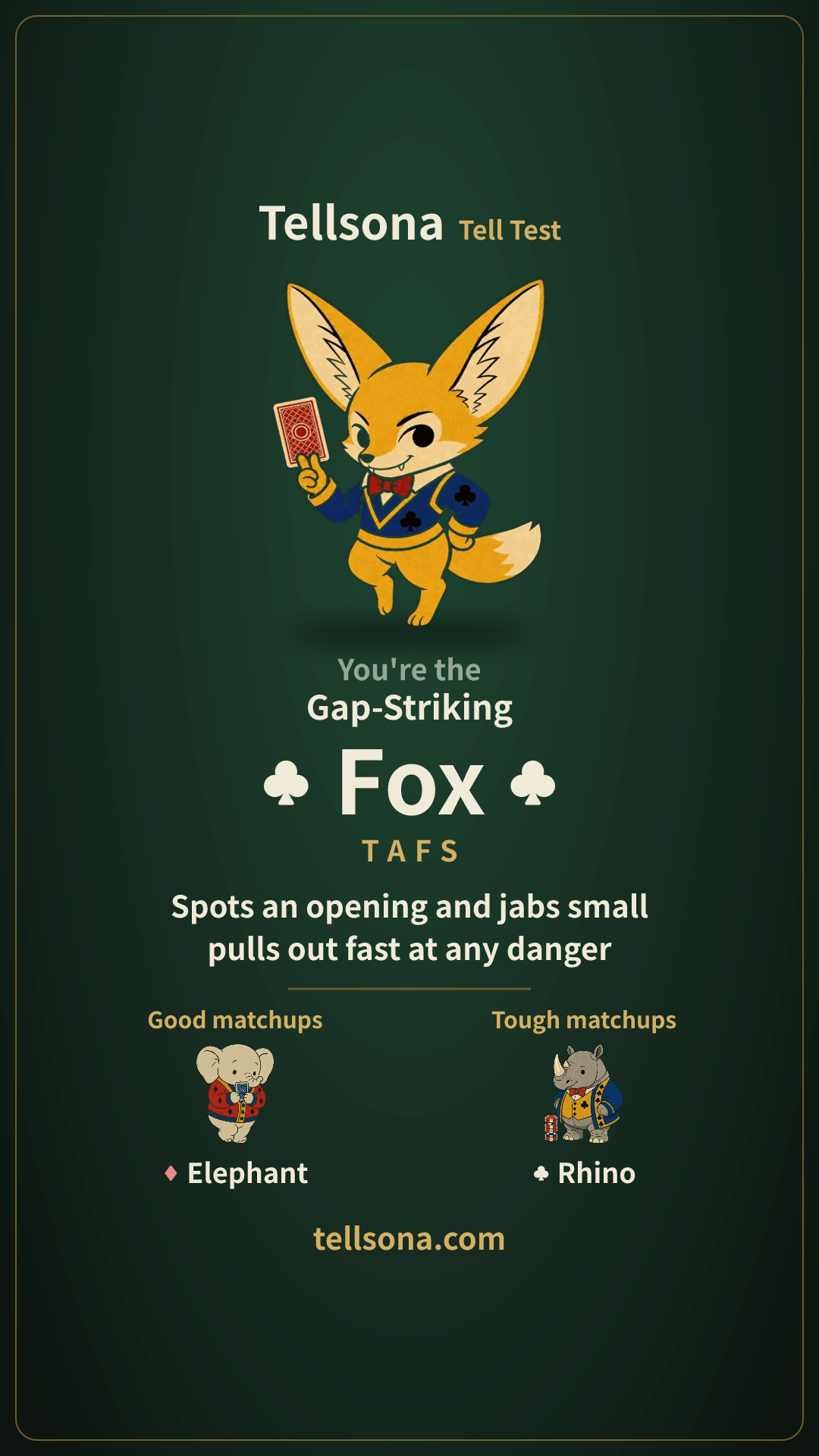
Gap-StrikingFox
Tellsona No.06
The Opportunist
TAFS
Spots an opening and jabs small
pulls out fast at any danger
What kind of player you are
You play few hands, and once you're in, you bet first yourself, but your bets are small. When an opponent fires back, you often fold without forcing it. You keep losses small and rarely have a big blowup. But betting small and folding when pushed back is also the pattern opponents can exploit most cheaply. If you bet small even with a strong hand and then fold to a raise, you give up pots that could have been yours.
For example, you open Broadway hands and pairs from the CO, and on the flop you bet 1/3 pot to see how your opponent reacts. If they fold, the hand is over, and if they call, you bet 1/3 again on the turn. When you're raised back, you fold unless you have a set or better. In spots where your opponent checks, you bet small to pick up the pot, but even with strong hands you rarely bet 2/3 pot or more.
Your tendencies
- Hands playedFewerYou tend to narrow your hands too much. You enter fewer pots than GTO and tend to drop hands worth defending from the blinds or playing in position. What slips away is the value of hands you could have entered cheaply.
- BettingMoreYou tend to bet first too often. You use bets and raises to take the initiative and take many pots by making opponents fold, but you also tend to put a lot in with poor hands.
- FoldingFolds easilyYou tend to let go when bet into. Facing a big bet with a medium-strength hand, you often fold. It avoids big losses, but you tend to get bluffed off your hand.
- SizingSmallerYou tend to bet too small. Your bets are cheap and your losses small, but you collect less with strong hands. To opponents, your bets tend to become a cheap look at the next card.
Your prescription
Betting small, then folding when raised: this is the combination opponents can exploit most cheaply.
Read why
First, when you have top pair or better on the flop, stay in until the turn even if you're raised. Next, on draw-heavy boards like T♥9♥8♣, bet 2/3 pot. Protect your strong hands, and use your sizing so opponents can't draw cheaply.
Strengths & weak spots
Your strengths: Small bets let you probe an opponent's thin spots cheaply
Your strengths: You avoid risky spots, so big losses are rare
Your strengths: You play few hands, so the hands you bet carry conviction
Your weak spot: It hurts when opponents raise your small bets.
Your weak spot: You struggle against a raise after you bet and fold even strong hands
Your weak spot: Your size stays small in key spots, so you leave chips behind
Same choice as GTO
– / –
This is how many of the 32 questions you answered the same way as GTO. It is not a judgment of skill or results. Record your hands at the table to see the same measure in real play.
We sent you a confirmation email
Install the app


Tap “Open and save my result” in the email → the GTO for all 32 hands appears in the app
We sent you a confirmation email. Tap “Open and save my result” in it to see the GTO for all 32 hands in your browser. You can also open it in the phone app with the same email address.
Didn’t get it? Send againHow it differs from GTO
Two areas show the biggest gap from GTO. The first is facing a raise after a small bet. GTO does not fold strong hands there. The second is betting strong hands. GTO bets big with part of them.
Matchups at the table
Matchups as seen from the Gap-Striking Fox. Tap a type to see the details of how the two match up.
Good matchups
Tough matchups
Every type
 No.01Ironhorn RhinoTough
 No.02Constricting SnakeTough
 No.03Rampaging BearEven
 No.04Snapping WolfTough
 No.05One-Kick KangarooEven
 No.06Gap-Striking FoxSame type
 No.07Dashing CheetahEdge
 No.08Mischief CatEven
 No.09Unbothered CapybaraEven
 No.10Shell-Keeper SnailEven
 No.11See-It-Through GiraffeEven
 No.12Hugging KoalaEven
 No.13Cautious ElephantEdge
 No.14Lookout RabbitEdge
 No.15Whimsical AlpacaEdge
 No.16Pecking SparrowEdge
More details
Where it sits among the 16 types
How common this type is
Share your result
Your tell updates with the hands you actually play
 Tell Test form?Form with real play
Your 32 answers become your first 32 hands in  log(GTO), the live poker hand-history, GTO grading and play-style analysis app.
Your 32 answers become your first 32 hands in log(GTO).
When you open the app, your result is updated using these 32 answers as the base, combined with your real-play records.
Once the app is installed, come back to this page and tap “Open in the app”.
▶ Open in the appScan with your phone to open in the app
No hands to record right now?
Without an account, your Tell Test result may disappear from this device.
Create an account firstWe emailed you a link to save your result
Open it to save your result. You can also open this result in the app by entering this email address.
Didn’t get it? Send again