Tell Test result
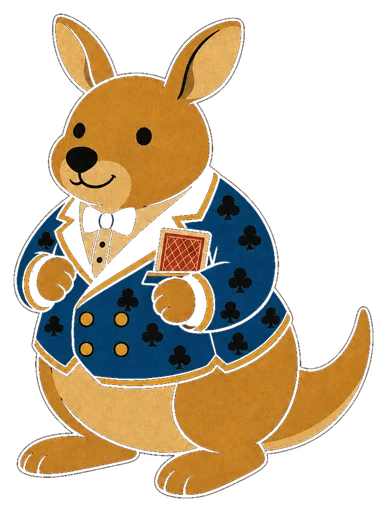
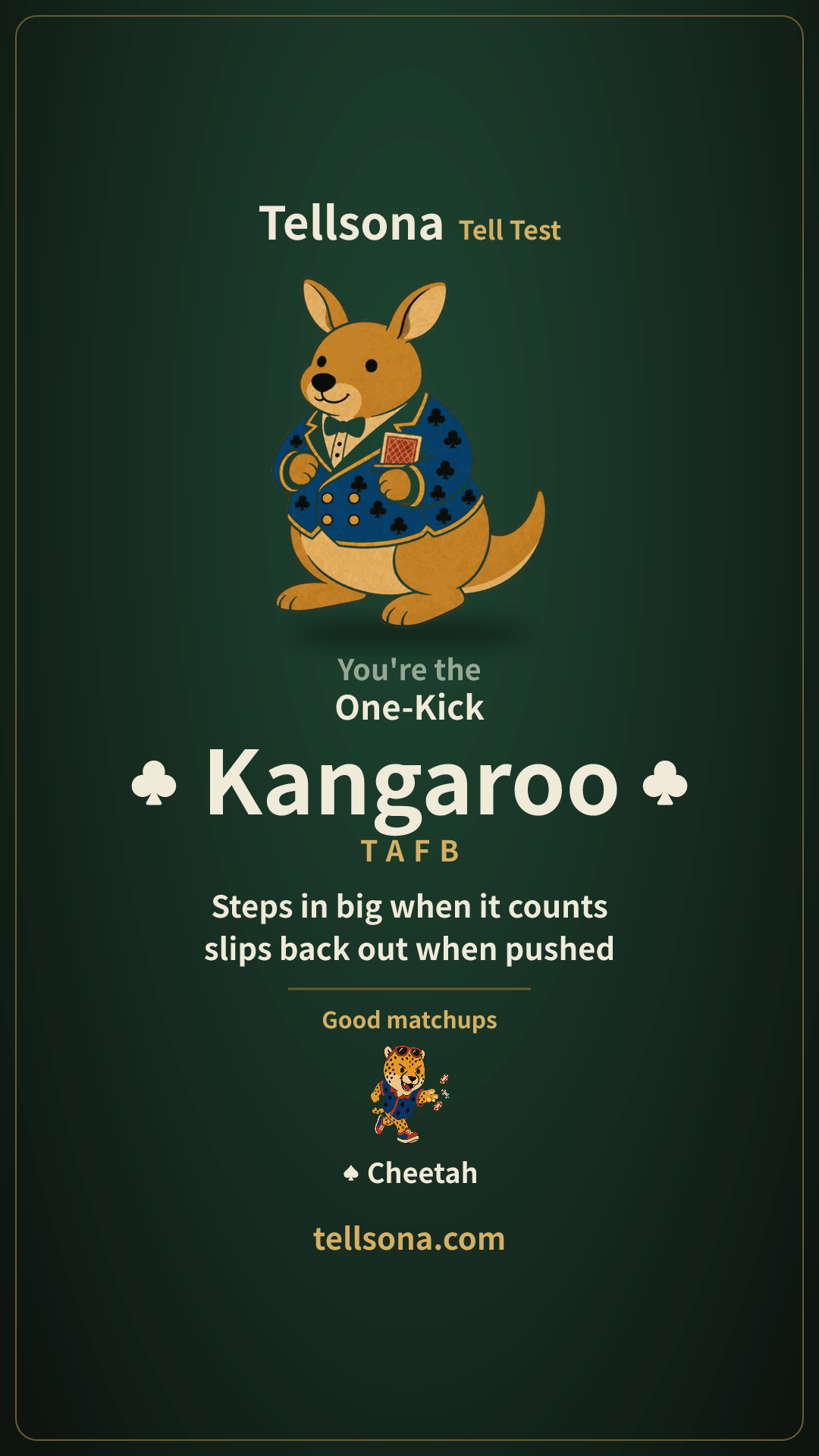
One-KickKangaroo
Tellsona No.05
The Charger
TAFB
Steps in big when it counts
slips back out when pushed
What kind of player you are
You play few hands, and once you're in, you bet big yourself. Making opponents fold with one strong bet is your strength. On the other hand, when an opponent raises you back, you often give up and fold. Because your big bets make opponents fold in many spots, you still take plenty of pots. Your leak shows when someone pushes back after you bet. If you fold hands you could have defended, opponents notice and start raising to take pots back.
For example, you open Broadway hands and pairs from the CO or the BTN, and when the BB calls, you bet 2/3 pot or more on the flop. When called, you keep betting big on the turn and push until your opponent folds. But when you're raised back on the flop or the turn, you fold unless you have two pair or better. You almost never use the options of checking or betting small.
Your tendencies
- Hands playedFewerYou tend to narrow your hands too much. You enter fewer pots than GTO and tend to drop hands worth defending from the blinds or playing in position. What slips away is the value of hands you could have entered cheaply.
- BettingMoreYou tend to bet first too often. You use bets and raises to take the initiative and take many pots by making opponents fold, but you also tend to put a lot in with poor hands.
- FoldingFolds easilyYou tend to let go when bet into. Facing a big bet with a medium-strength hand, you often fold. It avoids big losses, but you tend to get bluffed off your hand.
- SizingBiggerYou tend to bet too big. You collect a lot with strong hands, but betting the same big size every time lets opponents read your strength, and you tend to miss thin value.
Your prescription
Decide in advance which hands you'll defend when you're raised after betting.
Read why
Top pair top kicker, overpairs, and flush draws with overcards don't fold to a flop raise. An opponent who raises when you bet big is either very strong or expecting you to fold. Before you fold, think once about which of the two it is.
Strengths & weak spots
Your strengths: You play few hands, so your big bets are believed and opponents fold easily
Your strengths: You don't drag hands that are behind, so your losses stay small
Your strengths: Your key spots are clear, and you pick your pots with care
Your weak spot: It hurts when opponents raise after you bet.
Your weak spot: When raised, you fold even hands worth defending, and opponents chase you off with bluffs
Your weak spot: You have only big sizes, so you can't fine-tune your play to the opponent
Same choice as GTO
– / –
This is how many of the 32 questions you answered the same way as GTO. It is not a judgment of skill or results. Record your hands at the table to see the same measure in real play.
We sent you a confirmation email
Install the app


Tap “Open and save my result” in the email → the GTO for all 32 hands appears in the app
We sent you a confirmation email. Tap “Open and save my result” in it to see the GTO for all 32 hands in your browser. You can also open it in the phone app with the same email address.
Didn’t get it? Send againHow it differs from GTO
Two areas show the biggest gap from GTO. The first is when your bet gets raised on the flop or turn. GTO defends with a call when a hand has the pot odds. The second is bet size. GTO also mixes in small bets.
Matchups at the table
Matchups as seen from the One-Kick Kangaroo. Tap a type to see the details of how the two match up.
Good matchups
Tough matchups
No type clearly has the edge on the One-Kick Kangaroo (the others are even or good matchups).
Every type
 No.01Ironhorn RhinoEven
 No.02Constricting SnakeEven
 No.03Rampaging BearEven
 No.04Snapping WolfEven
 No.05One-Kick KangarooSame type
 No.06Gap-Striking FoxEven
 No.07Dashing CheetahEdge
 No.08Mischief CatEven
 No.09Unbothered CapybaraEven
 No.10Shell-Keeper SnailEven
 No.11See-It-Through GiraffeEven
 No.12Hugging KoalaEven
 No.13Cautious ElephantEven
 No.14Lookout RabbitEven
 No.15Whimsical AlpacaEven
 No.16Pecking SparrowEven
More details
Where it sits among the 16 types
How common this type is
Share your result
Your tell updates with the hands you actually play
 Tell Test form?Form with real play
Your 32 answers become your first 32 hands in  log(GTO), the live poker hand-history, GTO grading and play-style analysis app.
Your 32 answers become your first 32 hands in log(GTO).
When you open the app, your result is updated using these 32 answers as the base, combined with your real-play records.
Once the app is installed, come back to this page and tap “Open in the app”.
▶ Open in the appScan with your phone to open in the app
No hands to record right now?
Without an account, your Tell Test result may disappear from this device.
Create an account firstWe emailed you a link to save your result
Open it to save your result. You can also open this result in the app by entering this email address.
Didn’t get it? Send again