Unbothered Capybara × Unbothered Capybara
Where the difference shows at the table
Little difference on this axis
Both already play in a way that suits the other
Little difference on this axis
Both already play in a way that suits the other
If you face this type
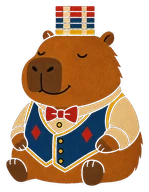
 Capybara
How to adjust your own play when you sit with the Unbothered Capybara.
- Bet=As isMostly value, fewer bluffs
- Raise↓LessRaise for value only
- Fold↑MoreTheir bets are usually strong
- Size↑BiggerSize up for value; they don't fold
Read more
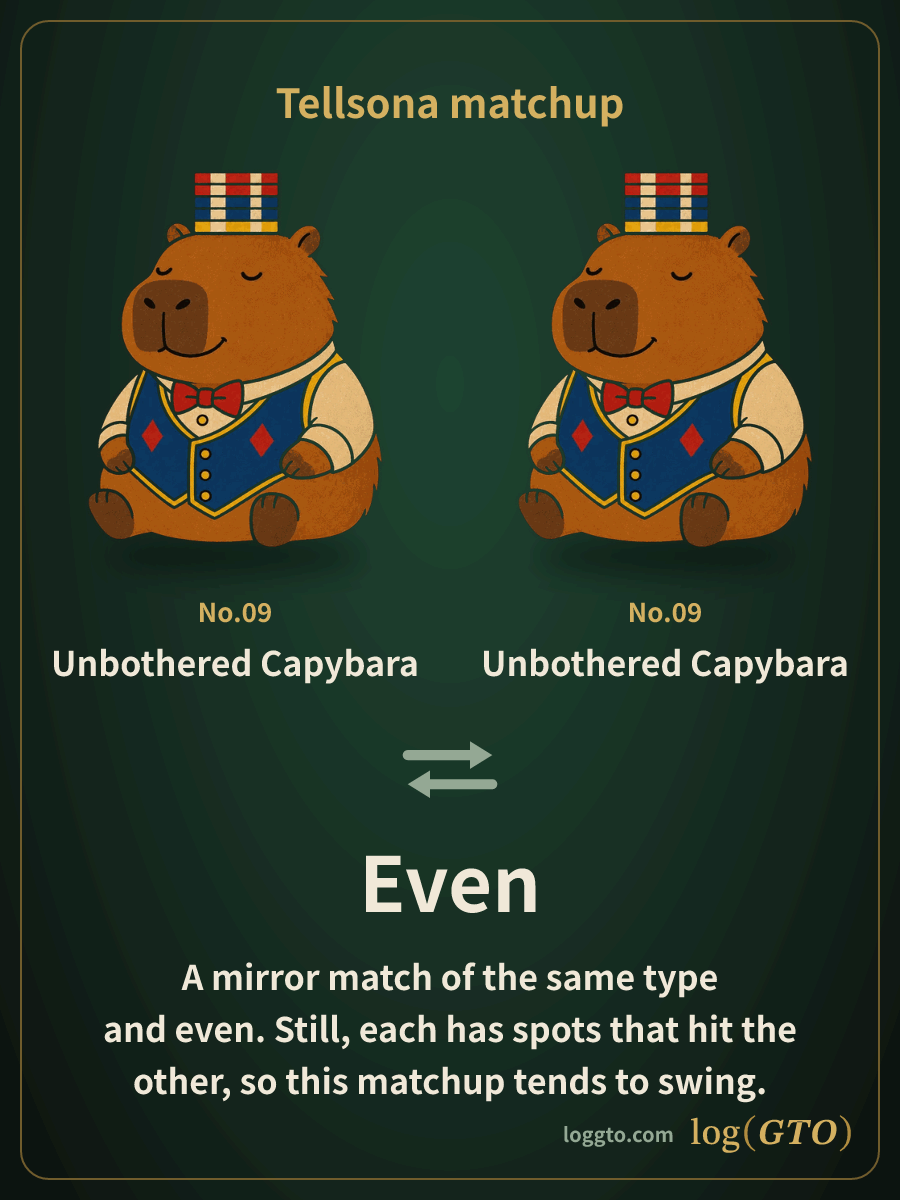
Tellsona matchup
EvenSwingy
A mirror match of the same type, and even. Still, each has spots that hit the other, so this matchup tends to swing.
Where the difference shows at the table
- Hands playedFewer=FewerLittle difference on this axis
- BettingLess⇄LessBoth already play in a way that suits the other
- FoldingHolds on=Holds onLittle difference on this axis
- SizingBigger⇄BiggerBoth already play in a way that suits the other
Left is the Unbothered Capybara, right is the Unbothered Capybara. The arrow points from the side whose natural style fits the prescription against the other (If you face this type).
The Unbothered Capybara, seen by the Unbothered Capybara
Against another Unbothered Capybara, it faces a mirror image with the same playbook, and each has spots that hit the other, so it tends to swing. The key axis is Initiative: what works against the Unbothered Capybara ("raise for value only") matches the Unbothered Capybara's natural style (bets less). At a table with the Unbothered Capybara, fold more (their bets are usually strong).
What is your tell? The Tell Test finds out from 32 hand spots (about 4 min, no sign-up). Take it with a friend and see how your two types match up.